-
 IELTS Topic: ENVIRONMENT
Reading 3
How one scientist is battling deforestation in Madagascar
Original source: The Guardian

Patricia Wright has devoted most of her professional life to working on Madagascar, home to a remarkable collection of plants and animals. She has managed to combine her research — among other things, she discovered two new species of lemurs on Madagascar — with efforts to preserve the country’s beleaguered forests and the many species of flora and fauna they contain.
A particular highlight was the creation of the 1991 creation of Ranomafana National Park in the country’s southeast.
Thanks to Dr Wright and others, rampant deforestation of Madagascar did slow and a thriving ecotourism sector was building. But in the wake of a March 2009 coup by local politician Andry Rajoelina, the ban on the harvesting of precious hardwoods, such as rosewood and ebony, was lifted and the destruction recommenced.
In a 2010 interview with journalist Steven Kotler for Yale Environment 360, Wright described efforts to halt the plunder. Some excerpts …
e360: Rosewood is a rare hardwood we’re all supposed to be avoiding — so who’s doing all the buying?
Wright: My sources say it’s going mostly to Asia, to China.
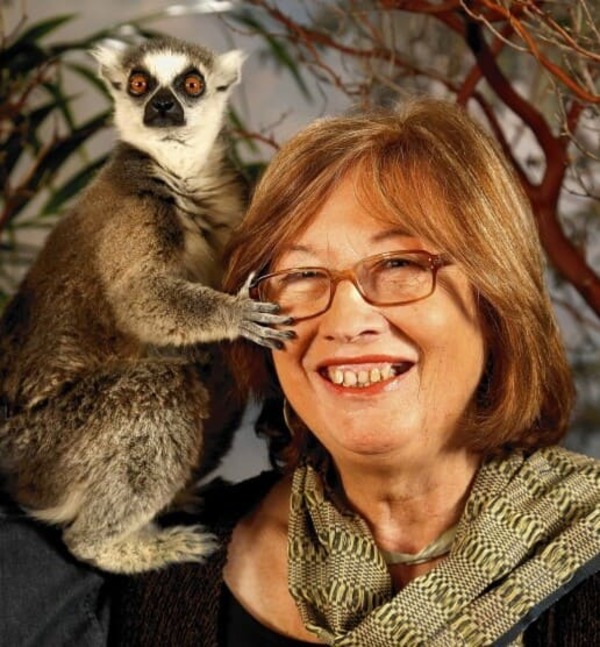
Dr Patricia Wright discovered two new species of lemurs in Madagascar.
Source: LA Times
e360: Are foreign governments applying any pressure to stop hardwood exportation?
Wright: There has been some, but not enough to make an impact. In the U.S., we have been putting pressure on anyone who buys rosewood from Madagascar to stop, but as far as I know there hasn’t been major pressure put on China.
e360: You’ve taken a very bottom-up approach at Ranomafana, where you’ve employed and educated a large chunk of the local population. Do you feel that it is more protected because you’ve worked so closely with the locals?
Wright: Yes, I think so. At our research station, we now employ 71 people full-time. Each of those people represents a good-sized extended family. And that helps.
When I first returned to Madagascar after the coup, the mayor [of Ranomafana] asked to see me. They had held a meeting with all the gendarmes and the traditional leaders and voted to keep this forest intact.
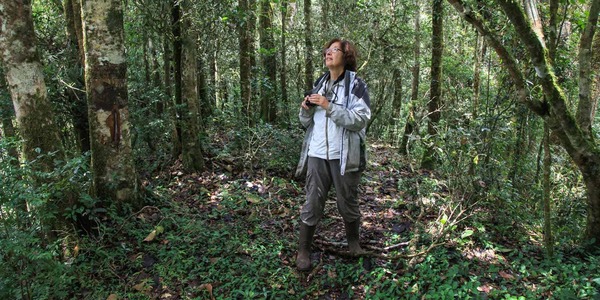
Dr Wright has worked tirelessly to protect Madagascar’s lowland rainforests by working very closely with the local population.
Source: Natural World Safaris
e360: Ranomafana became a World Heritage Site in 2007. Is it time we actually had some muscle behind these type of declarations?
Wright: Yes. There’s money for crisis situations when a World Heritage Site is threatened. It should be receiving emergency aid.
e360: So can that money be used for protection? Can you use it to hire armed guards?
Wright: I think so. We need to treat these situations more seriously. As if a country was invaded. You can’t get these forests back easily. It’s going to take hundreds of years.
We also have to think about reforestation with native species. We replanted rainforest trees in the 1990s in areas that had been slashed and burned.
I didn’t think these trees would actually grow. Now we’re seeing them, 15, 20 years later, fruiting and flowering and doing well. That means the lemurs can come back. And they’ll increase the forest by doing their job of seed dispersal.
I find that most optimistic.