-
 IELTS Topic: ENVIRONMENT
Reading 1
Household recycling can’t fix our plastic pollution crisis
Original source: The Guardian

Every minute, every single day, the equivalent of a truckload of plastic enters our oceans. In the name of profit and convenience, corporations are literally choking our planet with a substance that does not just “go away” when we toss it into a bin. Since the 1950s, some 8.3bn tons of plastic have been produced worldwide, and to date, only 9% of that has been recycled. Our oceans bear the brunt of our plastics epidemic – up to 12.7m tons of plastic end up in them every year.
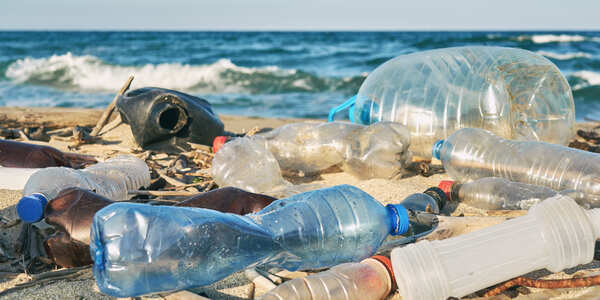
Household plastic water is choking our oceans and our beaches.
Source: Larina Marina/ Shutterstock
For years, we’ve been conned into thinking the problem of plastic packaging can be solved through better individual action. We’re told that if we simply recycle we’re doing our part. We’re told that if we bring reusable bags to the grocery store, we’re saving the world. We think that if we drink from a reusable bottle, we’re making enough of a difference. But the truth is that we cannot recycle our way out of this mess.
… corporations … continue to churn out throwaway plastic bottles, cups and straws
Recycling alone will never stem the flow of plastics into our oceans; we have to get to the source of the problem and slow down the production of all this plastic waste.
We need corporations – those like Coca-Cola, Unilever, Starbucks and Nestlé that continue to churn out throwaway plastic bottles, cups, and straws – to step up and show real accountability for the mess they’ve created. Drink companies produce over 500bn single-use plastic bottles annually; there is no way that we can recycle our way out of a problem of that scale.
Coco-cola, Unilever, Starbucks and Nestlé … (have the money to fund the research) to help us move beyond single-use plastics
Municipal bag, cup and straw bans like those in Morocco, Iceland, Vancouver and some US cities are a great start, but also not enough. And while clean-up efforts are helpful in addressing litter problems, they can’t begin to touch the problems created by microplastics – the tiny participles of plastic that now permeate our waterways and broader environment.
Not long ago, we existed in a world without throwaway plastic, and we can thrive that way again. The world’s largest corporations – with all their profits and innovation labs – are well positioned to help move us beyond single-use plastics.
This is their crisis to tackle. We must demand a new era that prioritizes people and planet over profit and convenience.
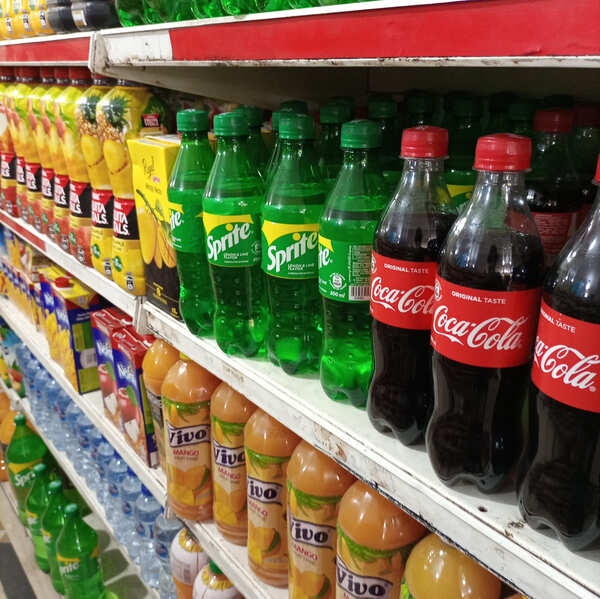
Drink bottles are one of the largest sources of single-use plastics that are thrown away and pollute the environment.
Source: Tea Talk/ Shutterstock