-
 IELTS Topic: ENVIRONMENT
Reading 2
Australians adapt to climate change
Original source: The Guardian, ABC News

Drought-tolerant crops
Jeff Burch roars with laughter when asked if he’s turning into a greenie.
“I don’t know if I’d go that far!”
But it’s a fair question to pose to the winemaker.
He has just spent hours outlining the environmental changes he is introducing at his Margaret River vineyard in Western Australia.
It’s crucial to give them a sunscreen so that the skins don’t dry up and crack
To name a couple — a long, dark green cloth is attached to rows of grapes to block out extreme sun and compost and hay is spread under vines to retain moisture.
And the best innovation? A special “sunscreen” that is sprayed onto precious grapes.
“A bit like your face, when your face gets sunburnt it gets harsh, it gets a little bit stiff,” Mr Burch said.
“It’s crucial to protect the grapes, so we give them a sunscreen so that the skins don’t dry up and crack.”
The clay-based material is mixed with water and sprayed onto the grapes — it washes off once harvest rolls around.
“The skins are crucial for tannins and for colour, so we need to have soft skins.”
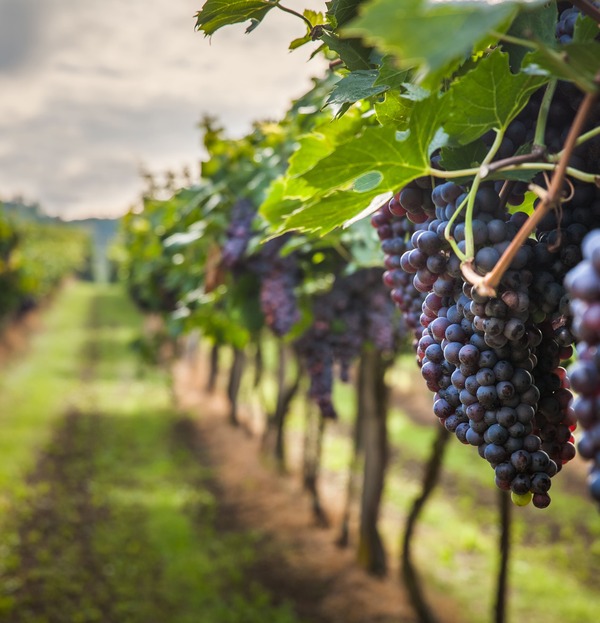
A sunscreen made from clay and water is sprayed onto grapes in some Australian vineyards to keep their skins soft.
Source: Lukasz Szwaj/Shutterstock
To Mr Burch, this is how you need to approach modern farming to respond to climate change.
“I’m not a science specialist on weather, I just know the facts are that we’re getting less rainfall; we’re getting more different weather patterns,” he said.
Mr Burch’s dams aren’t filling up at the pace they used to with annual rainfall at his winery down 20 per cent. Records show it’s also getting hotter.
Caitlyn Gribben
Bushfire-proof houses
In June 2009, not long after Victoria’s Black Saturday bushfires claimed 173 lives and destroyed more than 2000 houses, a group of architects came together to help those who had been affected.
As part of the Victorian bushfire reconstruction and recovery authority’s We will Rebuild initiative, they offered 19 designs, which were environmentally sustainable and met the “higher end” of the building standards for those in bushfire prone areas.
Since then, regulations have been stepped up further, and there are more bushfire resistant products on the market including bushfire resistant windows, doors and timber.
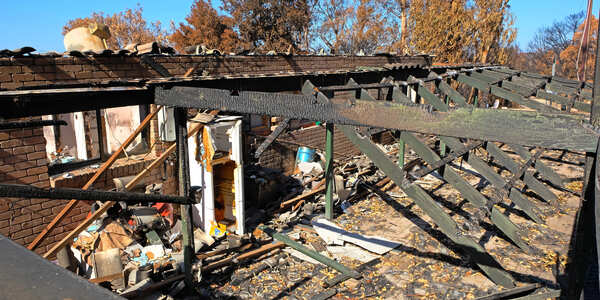
Australian bushfires are very destructive and some have destroyed hundreds, even thousands, of houses in just a few days.
Source: Adam Smith/ Shutterstock
Research architect Ian Weir, a spokesman for the Bushfire Building Council of Australia (BBCA), is known for his bushfire resistant designs. He says there’s a large market for them. He points to eminent architect Glenn Murcutt, who incorporated bushfire resistant features into many of his designs.
Murcutt’s innovations include black ceramic house tiles that reflect radiant heat, permanent water features on flat roofs, conspicuous sprinkler systems and leaf-shedding gutter designs.
Bushfire-resistant homes don’t have to look bizarre, Weir says. They can also be affordable. His Karri fire house design was created for a professional firefighter who lives in a bushfire-prone area. Only about 5% of the budget went towards satisfying the highest fire standard, the BAL-40.