-
 IELTS Topic: SPORTS
Reading 2
Olympic athletes give women new, strong role models
Original source: The Guardian

Skinny models, actresses and reality TV stars are no match for our powerful female athletes.
When a woman is asked to reveal her weight, the chances are she will lie. Often she won’t even admit to herself that’s what she’s doing. There have been occasions when I’ve calculated my body mass index and automatically knocked off half a stone, convincing myself that when I’ve been weighed previously I’ve simply been wearing a particularly heavy pair of shoes.
(my closest athletic match) looked terrific: tall, fit and – most importantly – healthy
But last week that changed. As part of its Olympics coverage, the BBC developed an online app enabling each user to identify their closest athletic match. Buoyed up by the life-affirming images of lean and muscular British female athletes performing at the highest levels – the heptathlete Jessica Ennis, the cyclist Victoria Pendleton and the boxer Nicola Adams – I typed in my height and my (true) weight.
Apparently, I was most like Elena Vesnina, a Russian tennis player competing in the women’s doubles. Admittedly I’d never heard of Vesnina before, but when I Googled her, she looked terrific: tall, fit and – most importantly – healthy.
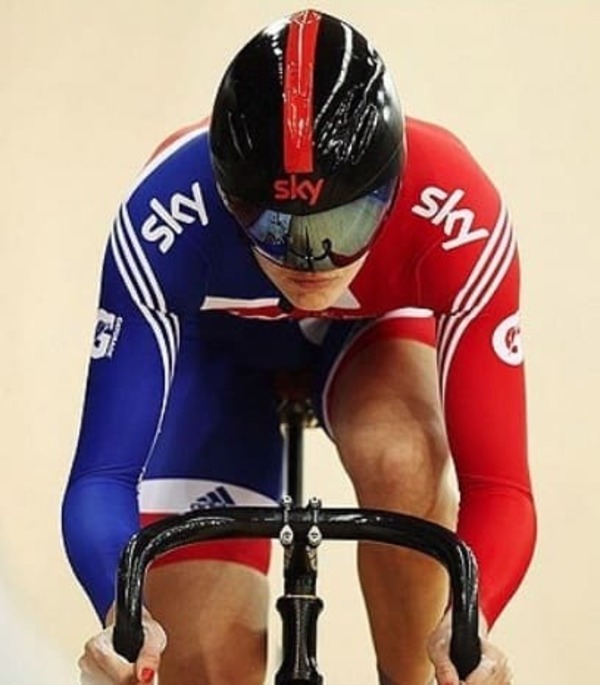
Whereas, a few weeks previously, I had been comparing myself unfavourably to improbably airbrushed Hollywood actresses and skinny catwalk models, for the first time in years I was being encouraged to value my body for its strength – for what it had the potential to do rather than how thin it could be.
Whereas … I had been comparing myself unfavourably to … skinny catwalk models … (I could) value my body for its strength
London 2012 has been the first Games in which women could compete in every sport. Along with this heightened visibility has come something less quantifiable: the sense, among ordinary women, that we have a new generation of role models to aspire to, whose bodies are revered for their physical abilities and not just their aesthetic qualities.
“We live in an age which is constantly about looks and now we’re watching bodies that are running fast and jumping high,” says Dr Linda Papadopoulos, the television psychologist whose work on body image has been widely published in academic journals. “Suddenly, worrying about ‘Am I thin?’ seems as silly as it is.”
Suddenly, worrying about ‘Am I thin?’ seems as silly as it is
Over the last fortnight, our screens have been filled not with the usual diet of size-zero actresses and surgically enhanced reality TV stars but with women who are proud to look powerful, who have muscles and who aren’t afraid to sweat and pant their way to a gold medal. And although many of these female athletes have been seen making small concessions to individual style – nails painted with a union flag or hair spritzed with glitter – we come away knowing that the way they look is secondary to how they perform.
It is hard to remember a time when women were given such a resoundingly positive message.