-
 IELTS Topic: HEALTH
Reading 3
As a GP, I don’t get angry with anti-vaxxers
Original source: The Guardian

Here’s one anniversary I won’t be celebrating: 10 years ago this week, the Lancet retracted an article published in 1998 that linked the measles, mumps and rubella (MMR) vaccine to autism. The retraction followed a General Medical Council (GMC) finding that lead author Andrew Wakefield had been dishonest.
It’s the second successive year that a national w
After the original paper, and despite the immediate objections raised by the medical community, there was a significant drop in MMR vaccination rates in the UK. In my GP surgery, rational people expressed concerns along the lines of “There’s no smoke without fire”, “I’ll wait until my child is older so that I can be sure they’re not autistic”, “My friend’s child was diagnosed with autism a few months after his MMR” and “I’ll get the jabs done privately so they can be given separately”.
On the whole, MMR rates have improved over the past 10 years although they remain just below the WHO recommended coverage of 95% or more. The public appears to have recognised that sometimes there is smoke without fire.
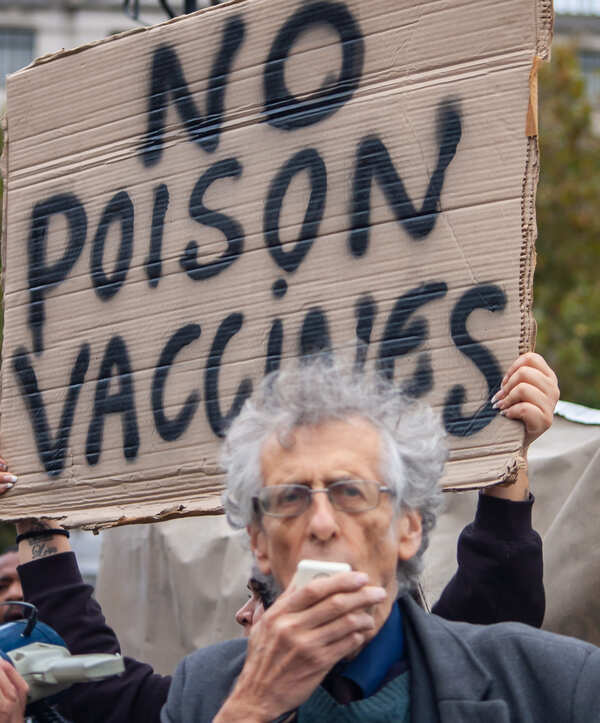
Committed anti-vaxxes can behave like religious fanatics and are sceptical of evidence-based healthcare.
Source: Jessica Girvan/Shutterstock
… Putting pressure on people … or forcing them to do something they are scared of is never a good idea
Fear has also played a part in improving uptake. There have been measles outbreaks in Orthodox Jewish communities in the US and Europe. Local rabbis have responded by urging their followers to vaccinate their kids and there is some evidence that this has been effective.
We live in paradoxical times. We buy more unproven, expensive “healthcare” products and treatments than ever before. Many seem willing, even happy, to suspend disbelief to buy into fake science. But among the enthusiasm for unproven therapies rests a profound scepticism to orthodox, evidence-based healthcare.
Committed anti-vaxxers sometimes display a sort of religious zealotry that makes attempts at dialogue deeply frustrating. But there is no reason to dismiss the concerns of parents and caregivers. Putting pressure on people, shaming them or forcing them to do something that they are scared of is never a good idea. Most people are reasonable: give them the data and they are only too pleased that their child has access to life-saving vaccinations.