-
 IELTS Topic: FAMILY
Reading 2
Children under the influence of both family and peers
Original source: The New York Times, The Guardian
Parents are vital role models
Joanna Moorhead says everything you do as a parent does matter
According to a new survey of 5,700 young people aged 13-16, commissioned by the Joseph Rowntree Foundation, parental habits turn out to be a major influence on adolescent drinking. A teenager who’s seen his or her parents drunk (even just the occasional time) is, it transpires, twice as likely to get drunk repeatedly him or herself.
The report concluded: “The findings suggest that efforts to improve drinking behaviour among young people at a national policy level are best directed at supporting and educating parents.
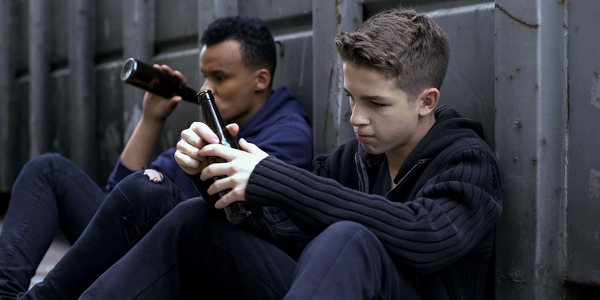
Many parents worry about the drinking habits of their teenage kids but it turns out that their own drinking behaviours may be to blame.
Source: Motortion Films/Shutterstock
“This should include positive messages for parents about how they can influence their child’s behaviour, and stress the importance of parents’ own drinking and what their children see and think about this.”
… I have role-modelled alcohol as a coping strategy
How inconvenient is that? It’s so much easier for us to blame the media, friends and the internet for all the bad stuff our children get up to. And maybe this means that, instead of berating my 17-year-old daughter for sometimes over-indulging in alcohol, I should be turning the spotlight on – gulp! – myself. Haven’t I sometimes resorted to a glass of wine – or three – at the end of a long, busy day?
So I have, in fact, role-modelled alcohol as a coping strategy from my daughter’s earliest years.
Teenagers, friends and bad decisions
Why do otherwise good kids seem to make bad decisions when they are with their friends? New research on risk taking and the teenage brain offers some answers.
In studies at Temple University, psychologists used functional magnetic resonance imaging scans on 40 teenagers and adults to determine if there are differences in brain activity when adolescents are alone versus with their friends. The findings suggest that teenage peer pressure has a distinct effect on brain signals involving risk and reward, helping to explain why young people are more likely to misbehave and take risks when their friends are watching.
… young people are more likely to misbehave and take risks when their friends are watching
“The presence of peers activated the reward circuitry in the brain of adolescents that it didn’t do in the case of adults,” said Laurence Steinberg, an author of the study, who is a psychology professor at Temple and author of “You and Your Adolescent: The Essential Guide for Ages 10 to 25.”
“We think we’ve uncovered one very plausible explanation for why adolescents do a lot of stupid things with their friends that they wouldn’t do when they are by themselves.”